When the temperature drops in Virginia and the sun sets at 5:00 PM, I know exactly what’s coming. I’ve spent nearly two decades working with dogs, and every winter, I see the same shift. The long, leisurely walks along the Potomac or the Mount Vernon Trail become rushed, shivering potty breaks. The backyard play sessions get cut short because it’s simply too cold or too muddy.
But here is the reality I face as a professional: the dog’s energy doesn’t drop just because the temperature does.
In fact, winter is often when I see behavioral issues skyrocket. Dogs are under-stimulated, owners are frustrated, and the walls of the house start to feel a lot closer. You might be seeing more chewing, more barking at the window, or a sudden inability to settle down in the evening.
The good news is that you don’t need to freeze your fingers off for three miles to get a calm dog. You need a shift in perspective. It’s not about keeping your dog busy; it’s about keeping your dog mentally stimulated and balanced.

Ready to Get Started?
Your dog deserves structured exercise, fun social enrichment, and a personalized fitness plan. Begin your journey today!
Get StartedBelow, I’m sharing my top Alexandria-based winter dog enrichment activities that burn energy safely and effectively. These are the same strategies I use in my professional programs to turn high-energy chaos into calm confidence.
Dog Enrichment Activities Are Not Optional — They’re Essential To Keep Your Dog Happy
Before we dive into the specific activities, we need to understand the difference between a dog that is “tired” and a dog that is “fulfilled.”
I see plenty of owners who run their dogs into the ground with fetch or hours of running, only to find the dog is still anxious or reactive inside the house. That’s because physical exercise creates an athlete, but mental stimulation creates a balanced companion.
Enrichment is the bridge between the two. When we neglect enrichment, especially in the winter, we see a spike in:
- Unwanted behaviors: Destruction, counter-surfing, and excessive vocalization.
- Anxiety: Pacing, whining, and inability to self-soothe.
- Impulse control issues: Jumping on guests or rushing doors.
Structured enrichment isn’t a “bonus” for your dog; it is a daily requirement for their biological welfare.
What Is Dog Enrichment, Really?
In my experience, people overcomplicate this. Enrichment is simply providing your dog with an outlet to express natural, species-specific behaviors in a constructive way. It supports the dog’s brain, satisfies their natural instincts (like sniffing, shredding, and scavenging), and helps with emotional regulation.
According to the ASPCA, enrichment is critical for behavioral health. It generally falls into five categories:
Food Enrichment
Working for calories rather than eating from a bowl.
Environmental Enrichment
Changing the physical surroundings to provide novelty.
Mental Exercise
Problem-solving and learning.
Physical Play
Keeping your dog active with purposeful movement.
Calming Activities
Soothing behaviors like licking or chewing.
The 5 Pillars of Dog Enrichment I Use in Professional Programs
At Canine Cardio, we don’t just “play with dogs.” We build them up. Whether a dog is in our gym or our structured daycare, we rely on five pillars of enrichment. If one is missing, the dog isn’t fully balanced.
- Physical Exercise: This isn’t just running around a yard. This is controlled, intentional movement that builds endurance and focus.
- Mental Stimulation: Engaging the brain through problem-solving and decision-making tasks.
- Food-Based Enrichment: Utilizing a dog’s natural drive to scavenge and work for food, preventing boredom.
- Environmental Enrichment: exposing dogs to new surfaces, sounds, and spaces to build confidence.
- Social Structure & Leadership: This is the most overlooked pillar. Dogs need calm guidance, not chaos. They need to know where they fit in the pack and who is leading them.
Rules That Help Dogs Thrive Indoors
Winter is actually the perfect time to double down on training and behavior foundations. Since we are inside more, we can control the environment better.
What Is the 3-3-3 Rule for Dog Training?
If you have recently adopted a dog or are restarting your training journey, keep the 3-3-3 Rule in mind. It generally suggests it takes 3 days to decompress, 3 to learn the routine, and 3 months to feel at home. Enrichment supports every phase of this by building a bond between you and the dog without the pressure of strict obedience drills.
What Is the 7-7-7 Rule for Dogs?
This is a socialization concept: exposing a puppy or dog to 7 new surfaces, 7 new people, and 7 new sounds. You can adapt this for winter enrichment inside your home or at a facility. Walking on a tarp, navigating a wobble board, or hearing new noises on a speaker all count.
10 Best Enrichment Ideas for Winter in Alexandria To Keep Your Dog Entertained
These activities are designed to burn energy, but a word of caution: for high-drive or behaviorally sensitive dogs, structure is key. These shouldn’t be free-for-alls; they should be supervised sessions where you are the leader.
1. Treadmill Training (Professional-Led Physical Exercise)
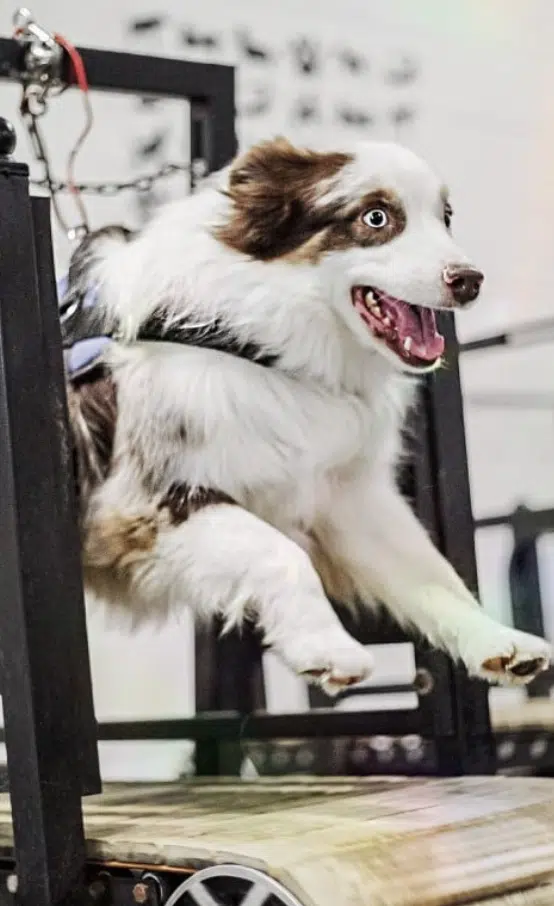
This is a cornerstone of our Canine Cardio Gym. Treadmill training is vastly different from chaotic running. It requires the dog to focus entirely on their stride and the machine. It builds confidence and endurance while providing a massive mental workout. It’s the ultimate winter hack for high-energy breeds.
Note: Never force a dog on a treadmill without proper introduction or professional guidance.
2. Scent Games & Hide-and-Seek
Did you know that 15 minutes of sniffing can be as exhausting as an hour of walking? Dogs “see” the world through their noses.
- How to do it: Put your dog in a “stay” (or hold their collar). Hide a high-value treat or their favorite toy in another room. Give the release command “Find it!”
- Why it works: It forces the dog to think independently and use their strongest sense. For more on the power of nose work, check out the American Kennel Club’s guide to scent work.
3. Food-Based Enrichment Feeding
Stop feeding your dog out of a bowl. It’s a wasted opportunity.
- Scatter feeding: Simply throw the kibble in the grass (if outside) or across a textured rug.
- Puzzle feeders: Use a Kong Wobbler or similar toy.
- Why it works: It taps into the scavenging instinct, making mealtime an activity rather than a 30-second inhaling event.
4. Snuffle Mats & DIY Puzzle Toys
If you don’t have a fancy puzzle toy, make one.
- The Muffin Tin Game: Put treats in a muffin tin and cover the holes with tennis balls. The dog has to move the ball to get the treat.
- Box Chaos: Take an Amazon box, fill it with crumpled paper, and toss treats inside.
- Snuffle Mats: These fabric mats require dogs to hunt through strips of fleece to find food. Whole Dog Journal explains why these are excellent for anxious foragers.
5. Lick Mats & Calming Enrichment
Not all enrichment needs to be high-octane. Licking is a self-soothing behavior for dogs that releases endorphins.
- How to do it: Smear peanut butter (xylitol-free), Greek yogurt, or wet food on a textured silicone mat and freeze it.
- Pro tip: Pair this with classical music to help an anxious dog settle during a winter storm.
6. Indoor Agility & Confidence Building
You don’t need competition equipment to do this.
- The Setup: Use a broomstick across two laundry baskets for a jump. Use a tunnel made of blankets over chairs.
- The Goal: It’s not about speed; it’s about body awareness. Teaching a dog to place their paws deliberately builds immense confidence.
7. Ball Pit & Object Navigation
This is a favorite in our gym recovery zones. A kiddie pool filled with plastic balls isn’t just fun; it’s a sensory experience.
- Why it works: The dog has to navigate unstable footing and strange sensations, which builds environmental confidence.
8. Dig Box & Natural Behavior Outlets
If you have a terrier or a husky, you know the urge to dig is strong. Instead of fighting it, give them a legal outlet.
- Indoor option: A large plastic tote filled with strips of towels or old t-shirts. Hide treats at the bottom.
- Why it works: Suppressing natural drives usually leads to frustration. Channeling them leads to satisfaction.
9. Flirt Pole (Done Correctly)
A flirt pole is essentially a giant cat toy for dogs—a lure on a rope attached to a pole.
- The Rules: This activity must have rules. The dog must sit and wait before chasing. They must “drop it” on command.
- Why it works: It exercises impulse control alongside prey drive. If you just let the dog chase it mindlessly, you are building obsession, not skills. Preventive Vet offers a great breakdown on safety and structure for flirt poles.
10. Structured Daycare & Gym-Based Enrichment
Sometimes, the best enrichment is a change of scenery in a professional environment. Unlike free-play daycares where dogs practice bad habits, our structured programs at Canine Cardio utilize “Pack Leaders.” We rotate between gym sessions, outdoor exposure, and rest cycles. It’s mental and physical cross-training that is hard to replicate in a living room.
The Limits of DIY Indoor Enrichment For Daily Life
I am a huge advocate for doing work at home, but I also see the limits of it. Many pet parents inadvertently create “adrenaline junkies” by constantly trying to keep their dog engaged without teaching them how to settle.
Furthermore, DIY enrichment often lacks the social aspect of navigating a space with neutral dogs or the leadership aspect of working for a handler. If your dog is struggling with over-arousal, simply giving them a puzzle toy might just frustrate them if they don’t have the foundation to solve it.
For a deeper dive on why mental stimulation is crucial (and how to balance it), The University of Melbourne has excellent research on canine boredom.
Why Structured Programs Create Real Behavioral Change For Your Furry Friend
This is where the “Train for Reality™” philosophy comes in. At Canine Cardio, we use purpose-built environments to create results.
When a dog comes to our gym or structured daycare, they aren’t just burning calories. They are learning:
- Confidence: By overcoming physical obstacles.
- Calmness: By existing in a room with other dogs without needing to interact with every single one.
- Engagement: By looking to the human Pack Leader for direction.
Safety is our baseline, but progression is our goal. We want your dog to go home better than they arrived.
What I See When Dogs Are Properly Enriched
When a client picks up their dog after a day of structured enrichment, the difference is visible immediately. It’s not just that the dog is asleep in the back seat. It’s that their eyes are soft. Their body is loose. They aren’t frantically looking for the next thing to do.
Proper enrichment reduces unwanted behaviors because the dog has no pent-up frustration to vent. It creates better communication between you and your dog because you have spent time engaging with them, not just managing them.
Veterinary Partner often discusses how behavioral health is just as important as physical health and medical health, and I see that truth in practice every single day.
Winter Is an Opportunity, Not a Setback
Don’t look at the winter months as a time to just “survive” with your dog. Look at it as a training advantage. It’s the season to build your bond, sharpen their mind, and introduce structure that will pay off when the warm weather returns.
Choose enrichment that serves your dog’s mind, body, and emotional balance. Whether it’s a simple snuffle mat on a Tuesday night or a structured slatmill session at our gym, your dog deserves to be fulfilled.

Ready to give your dog structured enrichment this winter?
If you are in the Alexandria or Virginia area and want to see the difference professional structure can make, come visit us. From our Canine Cardio Gym to our Snouts & Stouts on-leash cafe, we have a space for every dog and every dog lover to thrive.