Dog Training for Alexandria, Virginia Owners: When Should You Ask a Professional for Help?
September 26, 2026
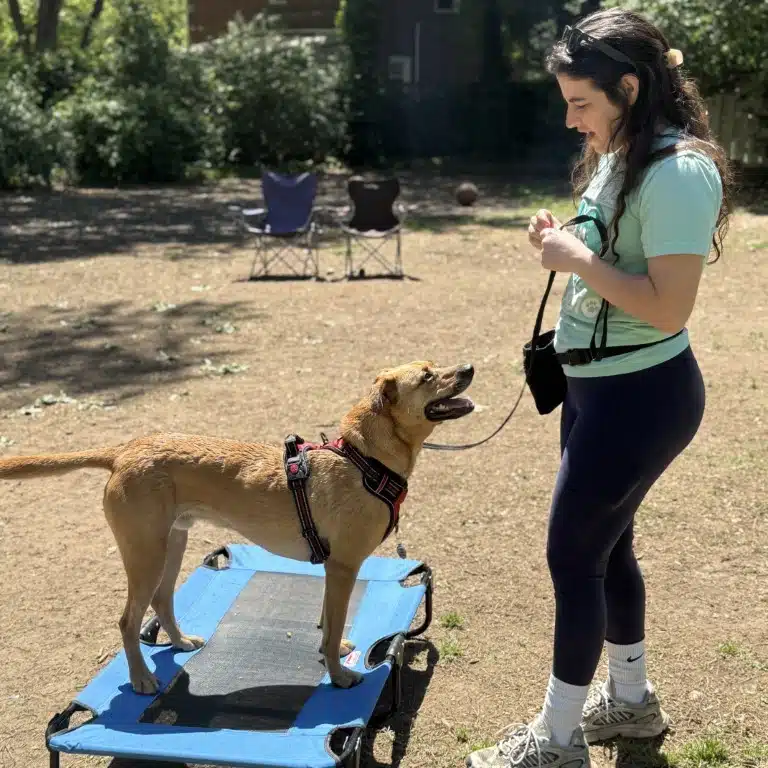
When people first reach out to me, they usually say the same thing: "I just need help with a couple of basic cues." Maybe their dog pulls on the leash, jumps on visitors, or ignores them the moment something more exciting comes along. And I get it. When you love your dog like family, you want the small stuff fixed so life feels easier for both of you.
But after nearly two decades of hands on work with dogs across Northern Virginia, I've learned something important. Dog training is rarely about a single cue. It's about communication, confidence, safety, and the relationship you share with your dog every single day. A dog that pulls or panics isn't being "bad." Most of the time, that dog is trying to tell you something about what they need.
Ready to Get Started?
Your dog deserves structured exercise, fun social enrichment, and a personalized fitness plan. Begin your journey today!
Get Started
Here's what I want you to hear first: asking for help from a professional dog trainer is not a failure. It's leadership. It's you choosing structure and clarity over frustration and guesswork. When I work with Alexandria area owners, we build a practical training plan around the individual dog in front of us their behavior, their personality, and your real training goals. No cookie cutter formulas. Just what works for your life and your pup.
Let's talk about when it's time to bring in a pro, and how the right guidance can change everything.
Dog Training: When Basic Cues Are Not Enough
Fundamentals matter. Sit, stay, and come are the building blocks of everything else. These three cues alone can make your dog safer, calmer, and far easier to live with.
Sit creates a moment of pause and self control. It can be practiced in virtually any location or situation, which makes it one of the most versatile tools in your training plan.
Stay is essential for puppy obedience and everyday safety think doorways, street crossings, and busy environments where you need your dog to hold their position.
Come is arguably the most important cue you'll ever teach. A reliable recall keeps your dog safe and gives you peace of mind in any situation.
But here's where a lot of owners get stuck. Your dog might perform beautifully in your quiet living room, then fall apart the second you step outside. Why? Because dogs don't automatically transfer what they learn from your kitchen to a busy sidewalk in Old Town. They need to understand these skills in the real world around other dogs, unfamiliar people, traffic, and all the everyday distractions of Alexandria life.
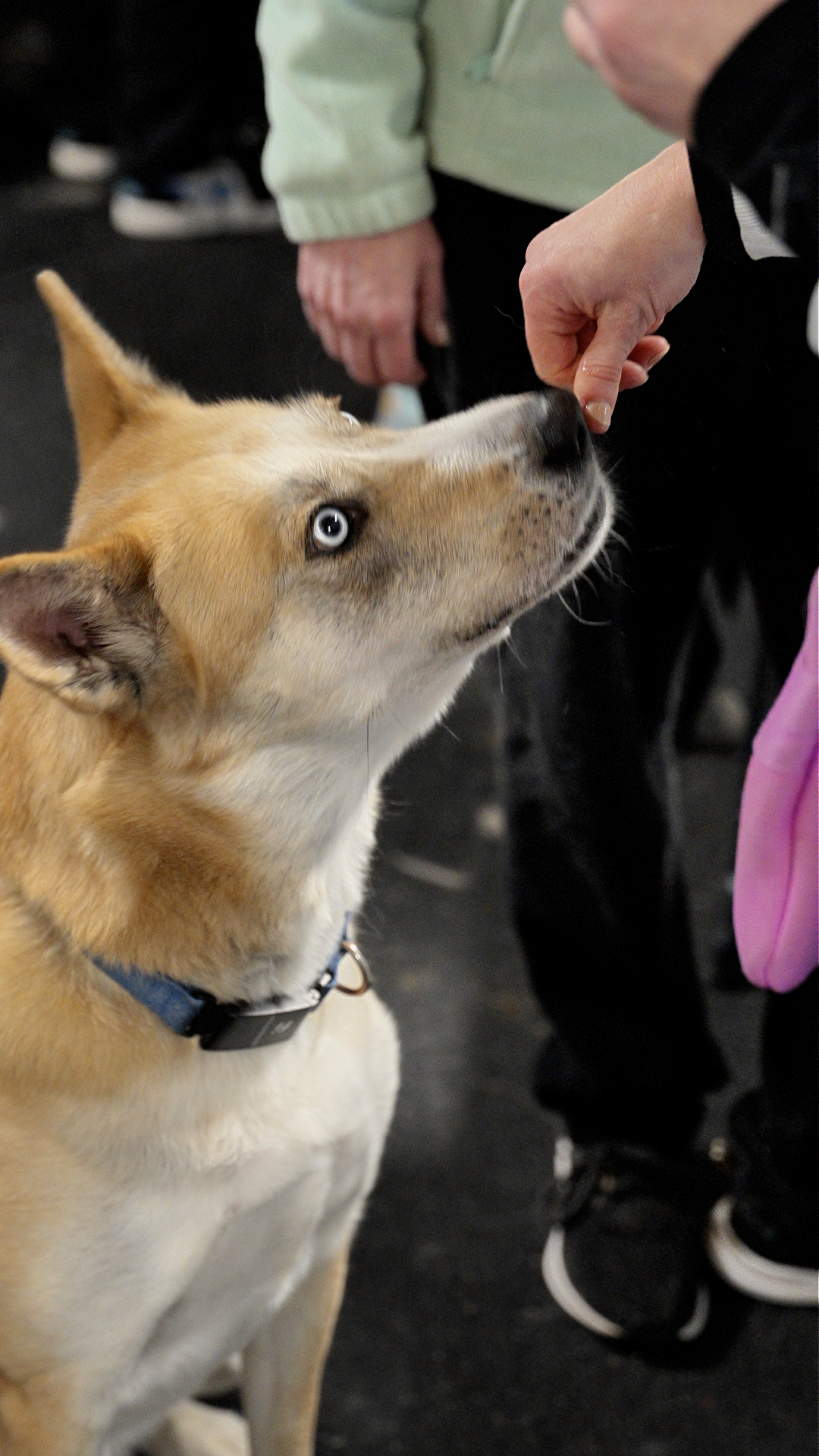
Real progress also depends on motivation. Without it, training stalls. Dogs need a reason to engage, and when that motivation is missing, the results show. That's why I use positive reinforcement as a foundation offering immediate rewards that strengthen the connection between a behavior and a positive outcome. When your dog associates the right choice with something they value, they start making that choice more consistently.
Training without motivation leads to poor results. Training with it paired with clear communication and consistent expectations changes everything.
The Science Behind How Dogs Learn
Dogs learn through a combination of classical and operant conditioning. What that means in plain terms is that they connect actions with outcomes. When you reward a behavior immediately and consistently, your dog begins to understand what you're asking. When your signals are unclear or inconsistent, confusion sets in and that confusion often looks like disobedience.
This is why clear communication is essential. Every cue, every reward, every correction sends information. The cleaner and more consistent that information is, the faster your dog learns.
Training sessions should be kept to 5 to 10 minutes to match your dog's natural attention span. Short, focused sessions done regularly are far more effective than long, exhausting ones. Frequency and repetition build the neural pathways that make behaviors stick.
Every training method should also be tailored to the individual dog in front of you. Age, breed, temperament, environment, and prior experience all shape how a dog learns and how quickly they progress. A confident young puppy and an anxious rescue with a rough history will move through training very differently and both timelines are completely valid.
Signs You Should Work With a Professional Dog Trainer
So how do you know when it's time to stop guessing and ask for expert help? Over the years, I've seen certain patterns come up again and again. If any of these sound familiar, working with a professional dog trainer could put you back on the right track:
Jumping on people — turning your back and removing attention when a dog jumps consistently discourages the behavior over time
Destructive chewing — offering appropriate chew toys and using bitter sprays on furniture can redirect this behavior, but understanding the root cause matters just as much
Excessive barking — whether it stems from boredom, anxiety, or territorial instincts, teaching a quiet cue and addressing the underlying trigger is essential
Fear or anxiety around unfamiliar people, dogs, or new environments
Aggression or any behavior that creates safety concerns for your family or others
Trouble with potty training or basic household rules
A puppy struggling with socialization during those critical early months
Training that feels inconsistent or has stopped producing progress
Feeling unsure how to build a training plan that fits your dog's specific needs
Identifying the root cause of a behavioral issue is always the first step toward modifying it. Patience is not optional here it's a requirement. Rushing behavior modification rarely works and can sometimes make things worse. The goal is lasting change, not a quick fix.
Noticing any of these signs isn't a reason to feel discouraged. It's a sign that your dog needs more structure and support than they're currently getting and that's something we can absolutely work on together.
Obedience Training Can Create a Stronger Foundation
Think of obedience training as the shared language you and your dog use to understand one another. It gives your dog clear expectations and gives you a consistent way to communicate what you need, moment to moment.
Good obedience training doesn't stop at basic cues. It builds from those fundamentals sit, stay, come, leash manners into more reliable, real world behavior. A dog who holds a stay at the front door, walks politely past another dog, or settles calmly at a café has training that has grown real roots.
Obedience training also helps reduce problem behaviors by giving dogs a clear framework for what's expected. When dogs understand the rules and trust their owner's guidance, there's far less room for anxiety driven or impulsive behavior to take hold.
Training classes typically run six weeks and cover the foundational skills your dog needs to succeed at home and in public. Consistency across every session and between sessions, in your daily life is what prevents confusion and keeps your dog on track. When you show up the same way each day, your dog finally understands what you're asking. That's where real transformation begins.
Private Training: When One on One Guidance Makes Sense
Sometimes a dog needs focused, individual attention and that's exactly what private training offers. Private lessons, available in 45-minute or 1-hour sessions, let us zero in on your dog's specific challenges without the distractions of a group setting.
I often recommend private training for owners dealing with:
Serious leash issues or reactivity
Fear and anxiety that need a gentle, controlled approach
Aggression or safety concerns that require careful management
Persistent jumping or difficulty settling
Destructive chewing or excessive barking that hasn't responded to basic redirection
Any behavior that feels unique to your dog and your home environment
One of the biggest advantages of working one on one is that I get to see what's really happening in your dog's everyday life. Behavior doesn't exist in a vacuum. When I understand your routine, your home, and your daily walks, I can help you spot the small triggers and habits that drive your dog's choices.
From there, we build a training plan around your dog's individual needs and your goals. Private sessions give us the space to move at your dog's pace, adjust methods to fit their learning style, and build the confidence they need before they're ready for a busier group environment.
Group Classes: Learning Around Real World Distractions
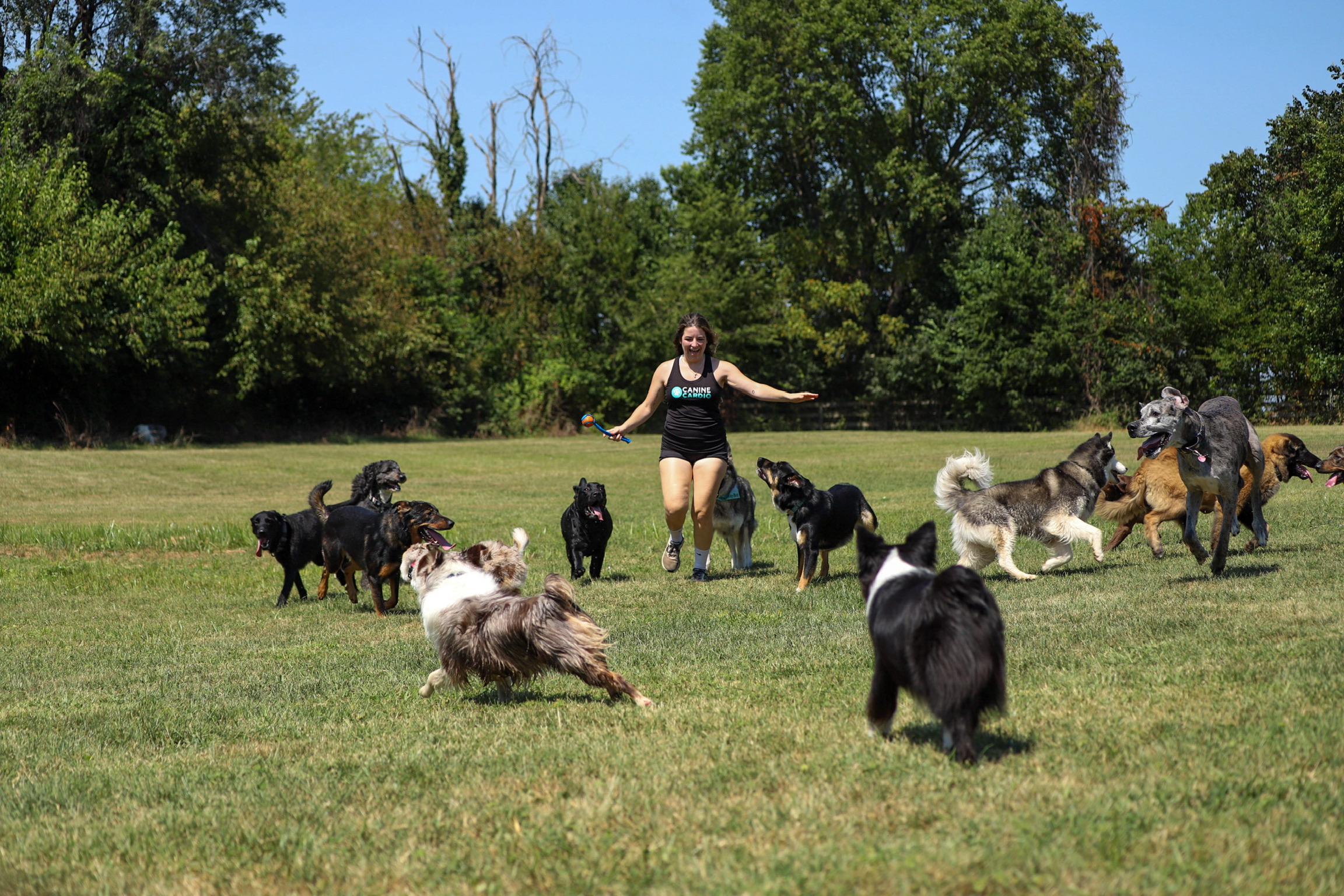
Once your dog has a solid foundation, group classes become a powerful next step. The real world is full of distractions and your dog needs to practice their skills right in the middle of them.
Our group classes keep session sizes small, typically 4 to 6 dogs, so every dog gets the attention they need while still benefiting from the energy and challenge of a social environment. This controlled exposure helps dogs learn to stay focused and calm even when there's a lot going on around them exactly the kind of self control that transfers into everyday life.
Group classes benefit you just as much. You'll sharpen your timing, communication, and consistency with real time coaching while your dog works. Learning to read your dog and respond in the moment is a skill, and there's no better environment to build it than alongside other owners doing the same work.
For our youngest learners, Puppy Training classes welcome dogs starting at 10 weeks old a critical window for socialization and early habit formation. For dogs who are a bit older, our Beginner Training classes are open to dogs 5 months and up, building the same foundational skills at a pace that suits a more mature dog.
Our Manners for Life class runs 6 weeks and is designed to turn those foundational skills into reliable, everyday behaviors your dog carries with them for life priced at $150 for the full course.
I'll be honest with you, though. Not every dog is ready for a group environment right away. Some dogs, especially those working through fear or reactivity, do best starting with private instruction. That's not a setback it's just meeting your dog where they are.
Positive Reinforcement and Clear Communication
Positive reinforcement is one of the most powerful tools in dog training. When a reward follows a behavior immediately, the connection between that behavior and the positive outcome becomes stronger with every repetition. Over time, your dog starts choosing the right behavior not because they have to, but because it works in their favor.
But rewards are only one part of the picture. Timing matters enormously. A treat delivered two seconds late can reinforce the wrong behavior entirely. Clear signals, consistent cues, and calm body language all send information your dog is constantly reading and responding to.
I spend a lot of time helping owners understand what their dogs are communicating through behavior and body language because training is a two way conversation. When you learn to read your dog as well as they're reading you, the relationship shifts. You stop repeating commands and start actually connecting.
This is what I mean when I say training is about communication, not just compliance.
Training Dogs for Everyday Life
The goal of every training plan I build isn't a perfectly performing dog in a controlled classroom. It's a dog who can navigate real life calmly, confidently, and safely.
That means practicing:
Walking without pulling, even on a busy street
Greeting people and other dogs without jumping or lunging
Settling at home after exercise or stimulation
Responding to sit, stay, and come even when distractions are present
Making better choices around triggers that used to derail them
Building the kind of confidence that comes from knowing what's expected
These are skills dogs need throughout their lives not just during a six week course. The training you put in during sessions only sticks if you carry it into your daily routines. Consistency between sessions is what turns a learned behavior into a reliable one.
When Behavior Requires More Work
Some behaviors need more than a few training sessions. Escalating fear, reactivity, and aggression don't typically resolve on their own and waiting too long to address them can make the pattern harder to break.
I always encourage owners to recognize the early signs. A dog who growls at strangers, lunges at other dogs, or becomes increasingly anxious in new environments is communicating that something isn't working. The sooner we identify what's driving that behavior, the sooner we can build a plan to address it.
Behavior modification takes patience. It takes consistency. And for some dogs, it takes a structured, step by step approach that unfolds over weeks or months. That's not a failure that's just how lasting change works.
When we take the time to understand what a dog is actually communicating, we can meet them where they are and guide them toward something better. That's the work I find most meaningful, and it's the work I'm most committed to doing well.
How I Help Alexandria Area Dog Owners
I've spent nearly two decades learning dogs not from a textbook, but one dog at a time, in the field, across every breed, energy level, and behavioral challenge you can imagine. That experience shapes every training plan I build and every recommendation I make.
My approach is built around Train for Reality a balanced, results driven philosophy rooted in calm confidence, clear communication, and real world application. It's not about training dogs to perform in a controlled environment. It's about helping them succeed in the world they actually live in.
Every dog who comes through Canine Cardio gets an individual evaluation first. From there, we match them to the right program whether that's private sessions, group classes, or a combination of both based on where they are and where you want them to be. I adjust instruction based on the dog's behavior, the owner's needs, and your training goals, always keeping real world application at the center of what we do.
Successful training, in my experience, always comes back to the same things: structure, consistency, patience, clear communication, and a relationship built on trust. When those pieces are in place, the results speak for themselves.
Conclusion: Asking for Help Can Put You Back on Track
Every dog learns at their own pace. Every owner starts somewhere. And no matter where you are right now frustrated, overwhelmed, or simply unsure of your next step there's a clear path forward.
Professional dog training gives you the knowledge, the structure, and the accountability to make real progress. It helps you understand your dog more deeply, communicate more clearly, and build a relationship that makes everyday life better for both of you.
If training feels inconsistent, unsafe, or like it's just not working reach out. You don't have to figure this out alone. The right training plan can help your dog become more confident, more responsive, and more prepared for the life you're building together.
That's what we do at Canine Cardio. And we'd love to help you get there.