Dog Nail Trimming in Arlington, Virginia: How Often Does Your Dog Need It?
September 16, 2026

The first time I really understood how much nails matter, I was watching a sweet older Labrador named Bella try to cross a tile floor. She hesitated at the edge, splayed her feet, and shuffled forward like the ground was made of ice. Her owner thought she was just getting old. But when I looked at her paws, the answer was right there her nails had grown so long they were forcing her toes apart and changing the way she stood. A few careful trims later, and that same dog was moving with confidence again.
After nearly two decades caring for Northern Virginia's most beloved dogs, I've learned that nail care is one of the most overlooked parts of a dog's health. Most people think of dog nail trimming as a cosmetic chore, something you get around to when the clicking on the hardwood gets annoying. But long nails do far more than make noise. They affect how a dog walks, stands, and carries weight across their paws and legs and in serious cases, they can cause real pain and injury.
Ready to Get Started?
Your dog deserves structured exercise, fun social enrichment, and a personalized fitness plan. Begin your journey today!
Get Started
At Canine Cardio, everything we do is built around movement and wellness. And healthy paws are where good movement starts. So let's talk about how often your dog really needs their nails trimmed, how to know when it's time, and how to make the whole thing calmer for both of you.
How Often Should You Trim Your Dog's Nails?
Here's the honest truth: there is no single schedule that works for every dog. I wish I could hand you one number and call it a day, but nail trimming depends on your individual pet.
That said, most dogs need their nails trimmed every three to six weeks. That range shifts based on a few key factors:
Breed and size. Some breeds simply grow thicker, faster nails than others.
Age. A young puppy and a senior dog rarely need the same routine. Puppies grow quickly, while older dogs often move less and wear their nails down more slowly.
Activity level. A dog running daily on pavement wears their nails naturally and may need trims less often. A dog who spends most of the day on carpet or grass usually doesn't get that same wear.
Surfaces. Dogs walked regularly on concrete or rough pavement may stretch their trimming schedule a little longer. Dogs on softer ground almost always need more frequent attention.
As a general rule, nails should not touch the ground or grow past the toe pads when your dog is standing. Most dogs benefit from having their nails checked every few weeks even if they don't need a full trim every single time. Think of it as regular maintenance, not a once a season event.
Staying ahead of the growth is always easier and less stressful than waiting until the nails are excessively long. When you keep up with small, regular trims, the quick the sensitive living tissue inside the nail that contains nerves and blood vessels gradually recedes. That means shorter nails stay shorter with less risk of accidentally hitting that sensitive area.
How Do You Know Your Dog Needs a Nail Trim?
Your dog can't tell you their feet are uncomfortable, so it helps to know the signs. These are the ones I encourage every owner to watch for:
Clicking on the floor. If you hear nails tapping across tile or hardwood, they're likely too long.
Nails growing past the toe pads. When your dog stands, their nails should not reach the floor or extend visibly beyond the paw.
Curling or visibly long nails. Nails that arc downward or curve toward the paw pad need attention right away.
Changes in walking or standing. A shift in posture or an awkward gait can point straight back to the paws.
Increased scratching. Long nails can catch and snag more easily.
Licking or sensitivity around the paws. Persistent licking often signals discomfort.
Difficulty keeping normal footing. Slipping or splaying on smooth surfaces is a common clue.
Overgrown nails can eventually become painful and contribute to injury. That's why I always recommend making a habit of inspecting your dog's paws, toes, and nails regularly. A quick look during belly rubs or after a walk goes a long way.
What Happens If a Dog's Nails Get Too Long?
I've seen firsthand what can happen when dog nail trimming gets pushed aside, and it's more than a grooming issue. Overgrown pet's nails can affect how a dog walks, stands, and exercises. When nails become too long, dogs may shift their weight to avoid pressure on their toes, which can place extra strain on their feet, legs, and joints.
In severe cases, nails can curl into the paw pad, causing painful wounds, skin irritation, and infection. Long nails are also more likely to snag on carpet, furniture, or sand, break, or tear. A damaged nail can bleed and become painful enough to require veterinary care.
I also remind owners that dog grooming involves more than a bath, coat, hair, or teeth. Paw and nail care are equally essential. Dogs with long hair around their feet can also collect debris, making regular checks even more important.
Don't forget to check your dog's paws, nails, and even the tail area during routine grooming. While nail care is different for cats and dogs, the same principle applies: regular maintenance helps prevent problems before they develop. As humans, we can easily overlook these small details, so I encourage owners to pay attention to their dog's movement and paws and discover potential issues early.
At Canine Cardio, comfortable movement is at the heart of everything we do. Keeping nails at a healthy length helps dogs move naturally, exercise comfortably, and stay active with confidence.
How to Trim Your Dog's Nails Safely
If your dog is comfortable with paw handling, home nail trimming is absolutely something you can do. Here's the process I recommend.
Set up a calm, well lit space. Choose a quiet area with good lighting and a non slip surface so your dog feels steady. Timing matters too trim nails after play or exercise, when your dog is already a little tired and more likely to settle.
Choose the right tool. Not all clippers are the same:
Scissor style clippers work well for small dogs and are easy to control.
Plier style clippers are a better fit for larger dogs with thicker nails.
Guillotine style clippers are an option, but they can be harder to use accurately and aren't always my first recommendation.
Nail grinders file the nail down gradually rather than cutting through it all at once. They offer excellent control and leave a smooth edge though the sound and vibration take some getting used to for sensitive dogs.
Go slow and trim only the tip. Use sharp clippers and cut only the very tip of the nail rather than trying to remove a large section at once. Small, gradual cuts help you stay well clear of the quick.
Know your nail color it changes everything.
With clear or light nails, you can often see the pinkish quick inside and stop before reaching it.
With dark or black nails, the quick is hidden. Trim in tiny slivers and watch the cross section of the nail as you go. When a small dark dot appears in the center of the cut surface, stop you're close to the quick.
Keep styptic powder or cornstarch ready. If you accidentally cut the quick and the nail starts bleeding, either one will stop it quickly. Keep them on hand before you ever pick up the clippers. Cutting the quick too short is one of the more common mistakes at home, and having the right supplies on hand turns a stressful moment into a manageable one.
Reward every step. Use positive reinforcement and treats throughout ideally pairing each nail with a small reward, even before you make a cut. Over a few sessions, many dogs start offering their paw on their own because they've learned good things happen there.
Know when to stop. If your dog becomes extremely stressed or shows real pain, end the session. Pushing through only makes the next attempt harder and can damage your dog's trust in the process.
Trainer Tip: Work on one or two nails per session if your dog is nervous. You don't have to do all the nails at once short, calm, rewarding sessions build more lasting comfort than one long, stressful marathon trim.
What If My Dog Hates Nail Trimming?
Some dogs pull their paws away, tremble, scratch, or simply refuse to cooperate. If that's your pup, you're not alone, and it's not a lost cause.
The most important thing I can tell you is this: forcing the process makes it worse. When you wrestle a scared dog through a trim, you teach them that nail time means fear. That memory sticks, and future sessions become even harder. Improper trimming whether too rough, too fast, or cutting the quick repeatedly can cause a dog to mistrust paw handling for a long time.
Instead, slow way down and build trust through gradual desensitization. Here's how I approach it:
Start by handling the paws daily when your dog is relaxed, with no tools in sight. Let touching the paws become completely normal.
Introduce the tools slowly. Let your dog see, sniff, and hear the clippers or grinder before they ever touch a nail.
Reward calm behavior immediately the moment your dog relaxes, mark it with a treat.
Work up gradually. Touch the clippers to a nail without cutting. Then trim just one nail. Then two. Build from there.
Always end on a good note stop before your dog gets overwhelmed, and finish every session with praise and a reward.
Whether you have a puppy just learning about the world or an adult dog undoing a bad experience, patience and consistency are what change things. This is the same philosophy that guides everything we do at Canine Cardio. Calm, confident leadership tells your dog they're safe. When a dog trusts that you have things handled, they can relax into care they used to fight.
Nail Clippers vs. Nail Grinders: Which Is Better?
This is one of the most common questions I hear, and the answer depends on your dog.
Nail clippers offer a quick, clean cut. They're fast and great for dogs who don't love standing still for long. Scissor style clippers work well for smaller dogs, while plier style clippers handle thicker nails on larger breeds. The main tradeoff is that a single cut removes more nail at once, so precision matters especially with dark nails.
Nail grinders file the nail down gradually using a rotating head. They give you more control and leave a smoother edge, which many owners prefer. The tradeoff is the sound and vibration, which some dogs find unsettling. For dogs sensitive to noise, let them hear the grinder running from across the room long before it ever touches their nails.
There's no universal winner. Some dogs tolerate grinding better because it feels less like a sudden pinch. Others do far better with a quick clip because the whole thing is over in seconds. Whichever tool you choose, introduce it slowly and pair every exposure with treats.
When Should You Use a Professional Groomer?
Sometimes the smartest, kindest choice is to hand this task to a professional, and there's no shame in that.
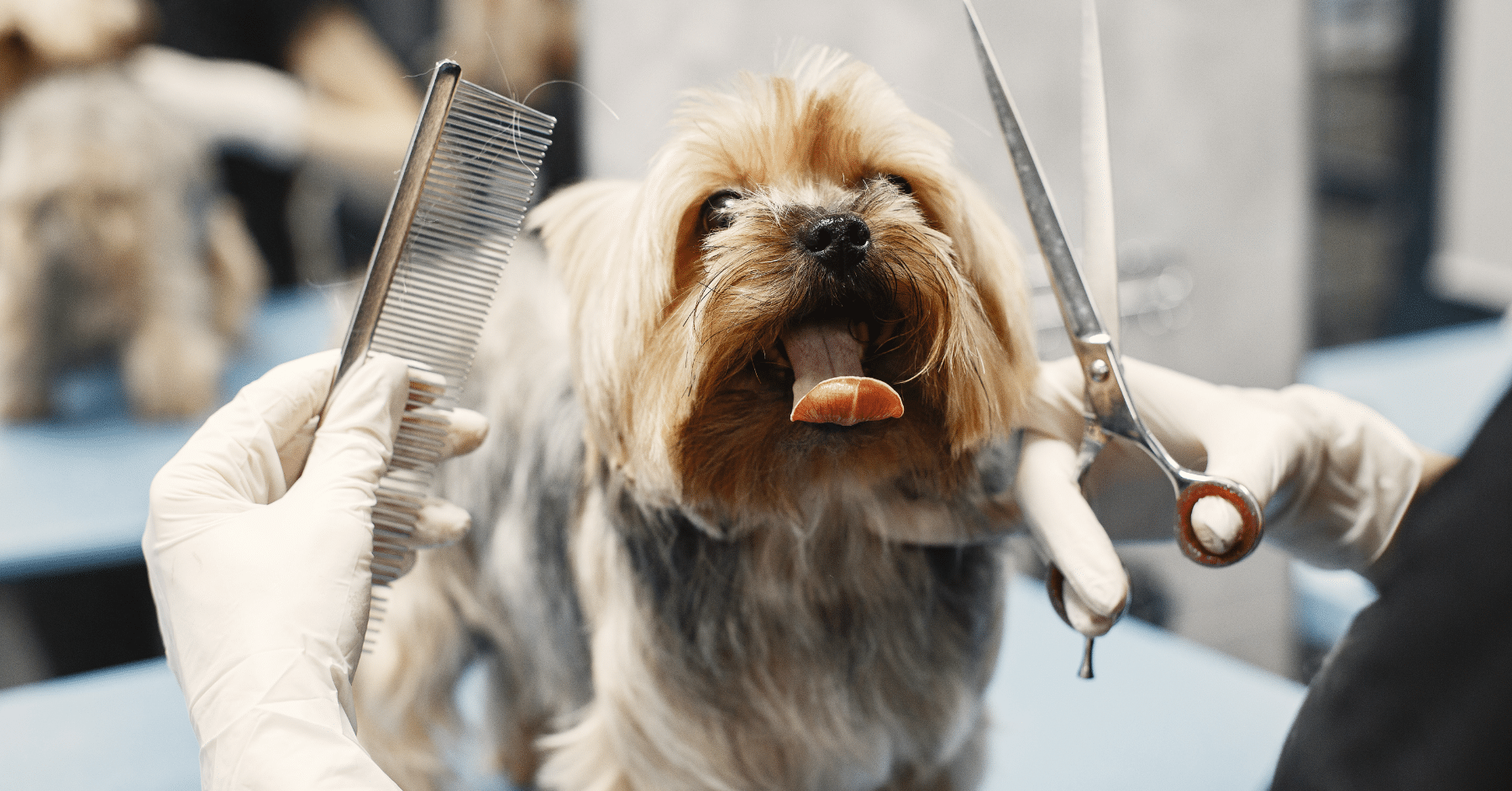
Professional nail trimming is especially worth considering if your dog has very long nails that need careful management, black nails that make the quick difficult to locate, sensitive paws, a fearful response to handling, or a history of painful trimming experiences. A skilled groomer handles nail care as part of regular grooming services and uses the right tools and techniques to avoid cutting the quick something that takes practice and a trained eye, especially with dark nails.
Keep in mind that some dogs do best with gradual exposure over multiple short appointments rather than one long, stressful full groom. That patient approach protects your dog's trust while still getting the job done. Repeated bad experiences at home can be difficult to undo, so if trimming has become a consistent battle, handing it off to a professional is a genuinely smart move.
When you're choosing someone, look for a groomer who is experienced, patient, and treats nail care as part of your dog's overall wellness not just a box to check before sending them home.
Can Walking Naturally Wear Down Your Dog's Nails?
Yes, walking can help but it usually isn't the whole answer.
When dogs walk on rough surfaces like pavement and sidewalks, friction naturally files their nails down. Dogs walked regularly on concrete may need trims less often than dogs who spend most of their time on grass, carpet, or softer ground. But even very active dogs who walk on hard surfaces still need their nails checked because natural wear is uneven and doesn't reach every nail.
Dewclaws are the clearest example. Those are the nails set higher on the inside of your dog's leg. They never make contact with the ground, so they never wear down naturally. Left unchecked, dewclaws can curl and grow into the surrounding tissue just like overgrown toenails and they need regular manual trimming regardless of how active your dog is.
My advice: keep walking your dog, enjoy the exercise together, and still check those paws and nails regularly. Activity helps, but it doesn't replace consistent care.
How Can I Help My Dog Get Comfortable With Nail Care?
Building comfort is all about structure and small wins. Here are the steps I use again and again:
Handle the paws daily, even when you're not trimming so touching feels completely normal.
Choose a calm moment, like after a walk or play session, when your dog is naturally a bit more relaxed.
Let your dog see and hear the tools before you ever use them.
Reward calm behavior the moment it happens don't wait until the session is over.
Work on one or two nails at a time in the early days, especially with a nervous dog.
Keep sessions short a few minutes is plenty, and always more effective than one long, stressful attempt.
Stop before your dog becomes overwhelmed, always ending on a positive note.
This is the heart of the Canine Cardio philosophy. Structure creates safety, and calm leadership builds confidence. When you approach nail care with patience and consistency, you're doing more than trimming nails you're teaching your dog that necessary care is nothing to fear. That confidence carries into everything else: grooming, exercise, vet visits, and everyday life.
Dog Nail Trimming in Arlington, Virginia
At Canine Cardio, we don't see nail trimming as a standalone task. We see it as one piece of a much bigger picture: your dog's physical, mental, and emotional wellness.
Healthy paws support comfortable movement. Comfortable movement supports exercise. And regular exercise is what keeps dogs strong, balanced, and genuinely fulfilled. It all connects. A dog with well maintained nails moves better, plays harder, and feels more confident on their feet whether they're running in the park, working through a gym session, or just walking across your kitchen floor.
Over nearly two decades, our team has worked with dogs of every age, breed, temperament, and activity level from bouncy puppies to gentle seniors, from easygoing companions to high drive athletes. That experience shapes how we handle every paw that comes through our doors here in Arlington and across the wider Northern Virginia community. Our grooming and wellness services are built on the same calm, structured approach we bring to everything we do.
Final Thoughts: Make Nail Care Part of Your Dog's Routine
If there's one thing I hope you take away, it's this: dog nail trimming deserves a permanent place in your dog's care routine. Don't wait until nails are visibly overgrown, curling, or clearly causing your dog discomfort. Aim for every three to six weeks, keep sessions calm and short, and use positive reinforcement every step of the way.
Small, consistent habits make the whole thing easier over time for both of you. Healthy paws let your dog move comfortably, join in the activity they love, and enjoy everyday life with confidence. That's what this is really about not just neat nails, but a dog who feels good in their own body.
Keep Your Dog Comfortable, Confident, and Moving
If nail care feels overwhelming, or you'd simply like an experienced hand, we're here for you. At Canine Cardio, nail trimming is part of our larger commitment to purposeful exercise, structure, leadership, and lifelong wellness for every dog we serve.
Arlington and Northern Virginia dog owners reach out to us or schedule an appointment today. Let's keep your dog's paws healthy and their whole life moving forward with confidence.